

Heavy Rope Australian Quality Explained for Fitness Buyers
Heavy rope Australian quality is defined by adherence to local material standards, environmental suitability, and manufacturing practices that determine whether a rope performs safely under real training and industrial conditions. The term covers everything from double-braided Nylon 66 fitness ropes to marine-grade steel cables, each governed by Australian benchmarks like AS 2759 and AS 3569. For fitness enthusiasts and rehabilitation practitioners researching heavy ropes, understanding what “Australian quality” actually means cuts through marketing noise and points directly to what matters: material integrity, correct weight-to-diameter ratios, and sourcing from authorized local suppliers. Windingropes, a pioneer in heavy rope training, builds its products around exactly these principles.
What materials and construction define high-quality heavy ropes in Australia?
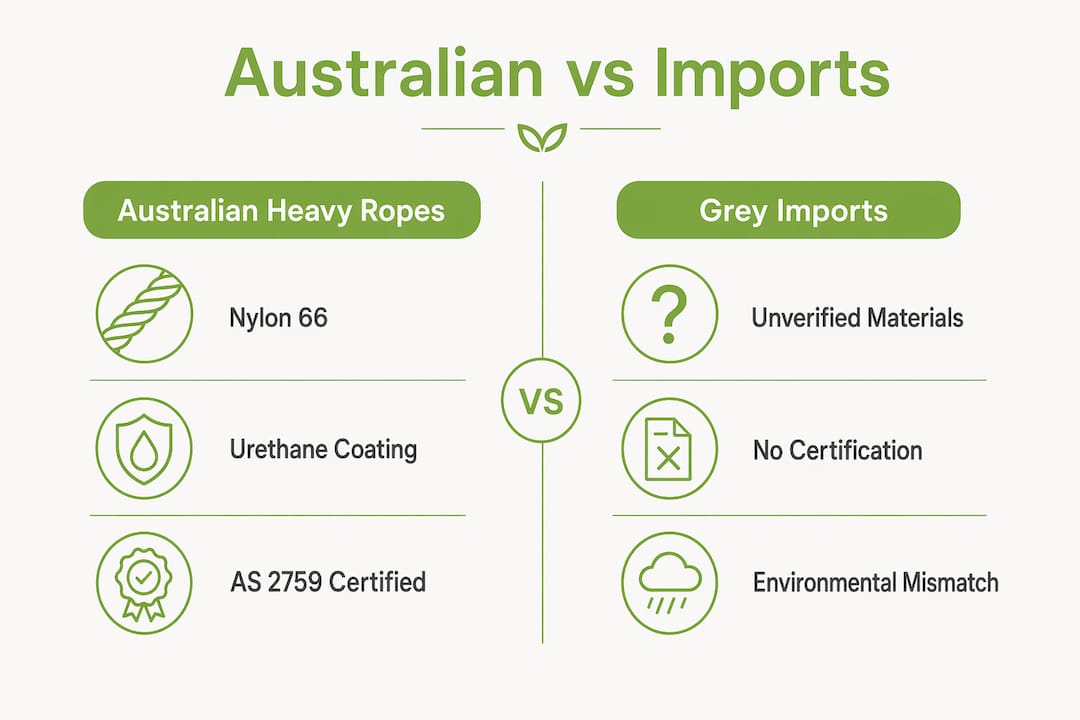
Material choice is the single biggest factor separating a quality Australian heavy rope from a generic import. The right material depends on where and how the rope is used, and Australian conditions are more demanding than most buyers expect.
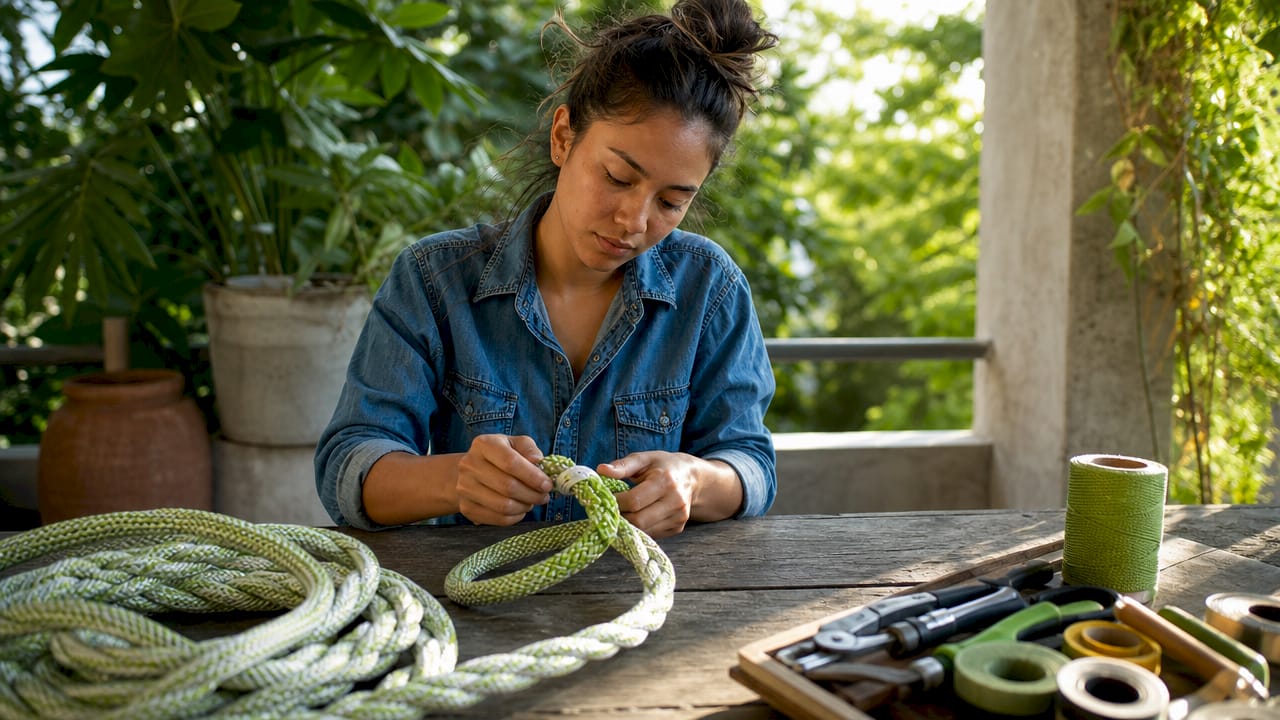
Double-braided Nylon 66 is the standard for fitness and kinetic recovery ropes. It absorbs shock, stretches under load, and resists abrasion across repeated training sessions. Authentic Australian-sourced ropes feature urethane polymer coatings that add another layer of abrasion resistance, extending the rope’s working life significantly.
For industrial and coastal applications, material selection splits into two clear categories:
- 316 marine-grade stainless steel contains molybdenum, which blocks chloride-induced corrosion. It is the correct choice within approximately 5 km of saltwater, though it carries about 20% lower breaking load compared to galvanized steel of the same diameter.
- Galvanized steel delivers higher tensile strength in dry inland environments. The 1770 N/mm² grade is favored for small-diameter, high-strength applications where load capacity matters more than corrosion resistance.
- Urethane polymer coatings on Nylon 66 ropes reduce surface wear and maintain grip texture through heavy use cycles.
- Braiding construction matters as much as material. Double-braided designs distribute load evenly across the rope’s cross-section, reducing stress concentration that causes premature failure.
Pro Tip: For fitness rope flow training, prioritize weight-to-diameter ratio over raw breaking strength. A 14mm rope at approximately 550 grams delivers the tactile feedback needed to master movement patterns, while heavier ropes at the same diameter change the training stimulus entirely.
The weight-to-diameter ratio is a specification that generic rope catalogs rarely list but that fitness professionals treat as a primary selection criterion. Getting this ratio wrong means the rope either feels dead in the hand or creates excessive fatigue before technique can develop.
How do Australian standards influence heavy rope quality and selection?
Australian standards do not simply set a minimum breaking strength and stop there. AS 2759 and AS 3569 prioritize environmental performance first and breaking strength second. That ordering reflects the reality that a rope failing due to corrosion or UV degradation is just as dangerous as one that snaps under load.
The standards influence selection in four practical ways:
- Environment-first classification. Ropes are selected based on the operating environment before any other factor. Coastal, inland dry, and high-humidity settings each map to different approved materials and coatings.
- Inspection protocols. Standards specify how often ropes must be checked and what constitutes a disqualifying defect. Bending the rope to detect internal wire breaks is a required technique because surface inspection alone misses subsurface fatigue.
- Industry benchmarks as quality signals. Telstra-approved specifications for telecommunications ropes serve as a recognized quality floor. Ropes meeting these specifications have passed documented performance testing, not just manufacturer claims.
- Maintenance schedules. Standards define replacement criteria that extend rope life when followed. A rope with one or two broken wires does not automatically require replacement if the core remains intact and monitoring continues.
“Regular inspections for wear, corrosion, and internal wire breaks significantly reduce rope failure risks, complementing initial material quality for safety and longevity.” — Wire Rope, Steel Cable, Cords
For fitness buyers, these standards translate into a practical filter. A rope built to Australian industrial benchmarks has been engineered with documented performance criteria, not assembled to a price point. That distinction matters when the rope is absorbing repeated dynamic loads during heavy rope training sessions.
Why local sourcing and authenticity matter for Australian quality heavy ropes
Buying from an authorized Australian distributor is not a preference. It is the mechanism that makes quality claims verifiable. Local suppliers guarantee manufacturer warranties, which is the only way to confirm that a rope meets the specifications printed on its label.
Grey imports create several specific risks that buyers underestimate:
- Unknown performance history. Imported ropes may carry certifications from other markets that do not map to Australian standards. A rope rated for European conditions may underperform in Australian coastal heat or UV exposure.
- Voided warranties. Manufacturer warranties are typically void on grey market products. If a fitness rope fails during a training session, the buyer has no recourse.
- Inconsistent specifications. Grey market ropes frequently show diameter and weight figures that do not match the actual product. For fitness applications, this makes progressive overload programming unreliable.
- No compliance verification. Authorized distributors maintain documentation linking each product batch to its test results. Grey imports arrive without this chain of evidence.
Pro Tip: Ask any Australian rope supplier for the product’s compliance documentation before purchasing. A legitimate supplier will provide it immediately. Hesitation or vague answers about “equivalent standards” is a clear signal to look elsewhere.
Sourcing from authorized local distributors also supports the environmental adaptability that defines Australian quality. A distributor operating in Australia understands the difference between what a rope needs to perform in Brisbane’s coastal humidity versus the dry heat of inland Queensland. That knowledge shapes stock selection and product recommendations in ways that an overseas seller cannot replicate.
How do heavy ropes deliver training benefits for fitness and rehabilitation?
Heavy rope quality directly determines training effectiveness. A rope that is too light provides insufficient resistance for muscle engagement. A rope that is too heavy prevents the fluid movement patterns needed for skill development and rehabilitation work.
The core training variables for heavy ropes are:
- Rope weight and diameter. A 14mm rope at approximately 550 grams provides the feedback density needed for rope flow mastery. Heavier options, such as 1 kg or 1.25 kg ropes, shift the stimulus toward strength and endurance.
- Anchor point distance. Standing closer to the anchor point increases rope tension and muscle engagement without changing the rope itself. This is the most underused variable in heavy rope training.
- Training duration. Extending time under tension produces endurance adaptations. Shortening duration with maximum effort produces power adaptations. The rope’s quality determines how consistently it delivers resistance across both protocols.
- Movement complexity. Higher-quality ropes with precise weight distribution allow practitioners to execute complex flow patterns that engage coordination and cognitive function alongside physical output.
Pro Tip: Progressive overload with heavy ropes does not require buying heavier ropes every few weeks. Adjust your anchor distance first, then duration, then movement complexity. Only add rope weight when all three variables have been maximized at your current level.
Rehabilitation applications benefit from this same logic. A lighter rope at a greater anchor distance creates low-load, high-feedback conditions ideal for shoulder or wrist recovery. Windingropes designs its range with this progression in mind, offering multiple weights that support movement from early rehabilitation through advanced strength training. The Rope Down Under at 12mm and 450 grams is a practical starting point for practitioners building toward heavier loads.
Key takeaways
Australian heavy rope quality is determined by material selection matched to environment, compliance with AS 2759 and AS 3569, and sourcing from authorized local distributors who can verify specifications and honor warranties.
| Point | Details |
|---|---|
| Material drives performance | Double-braided Nylon 66 with urethane coating is the standard for fitness and recovery ropes in Australia. |
| Standards set the floor | AS 2759 and AS 3569 prioritize environmental performance over breaking strength alone. |
| Local sourcing protects buyers | Authorized Australian distributors provide warranty coverage and compliance documentation that grey imports cannot match. |
| Weight-to-diameter ratio matters | A 14mm rope at approximately 550 grams delivers the right feedback for rope flow training and skill development. |
| Technique multiplies rope value | Adjusting anchor distance and duration extracts more training benefit than simply buying a heavier rope. |
What I have learned from years of working with heavy ropes in Australia
Most buyers focus on weight and price. Both are the wrong starting point.
The question that actually predicts training outcomes is whether the rope’s weight-to-diameter ratio matches the movement you are trying to develop. A rope that is too heavy for your current skill level does not build strength faster. It breaks down movement quality and slows skill acquisition. I have watched experienced fitness practitioners plateau for months because they jumped to a heavier rope before mastering the mechanics at a lighter load.
The Australian environment adds a layer of complexity that buyers from other markets rarely consider. Coastal conditions accelerate material degradation in ways that are not visible until a rope fails. Galvanized steel that performs well in a dry inland gym will corrode faster than expected within a few kilometers of the ocean. Choosing the wrong material is not a minor inconvenience. It is a safety issue.
Grey imports are the other problem I keep seeing. The specifications on the label look identical to an authorized product. The price is lower. The warranty documentation is vague or absent. When the rope fails, and some do, the buyer has no path to resolution. The savings are not worth the risk, particularly for fitness applications where a rope failure during dynamic movement can cause injury.
The insight that changed how I think about heavy rope training is that resistance manipulation through positioning and duration offers more versatility than rope weight alone. You do not need a full rack of ropes at different weights. You need one or two quality ropes and the knowledge to use anchor distance and time under tension as your primary training variables. That approach is more effective and far less expensive.
Regular inspection is the habit most practitioners skip. Bending the rope to check for internal wire breaks takes thirty seconds. Missing a developing failure point takes much longer to recover from.
— Pablo
Windingropes and Australian quality heavy rope training
Windingropes builds heavy ropes specifically for flow training and progressive strength development, with products made in Australia to meet local material and performance standards.
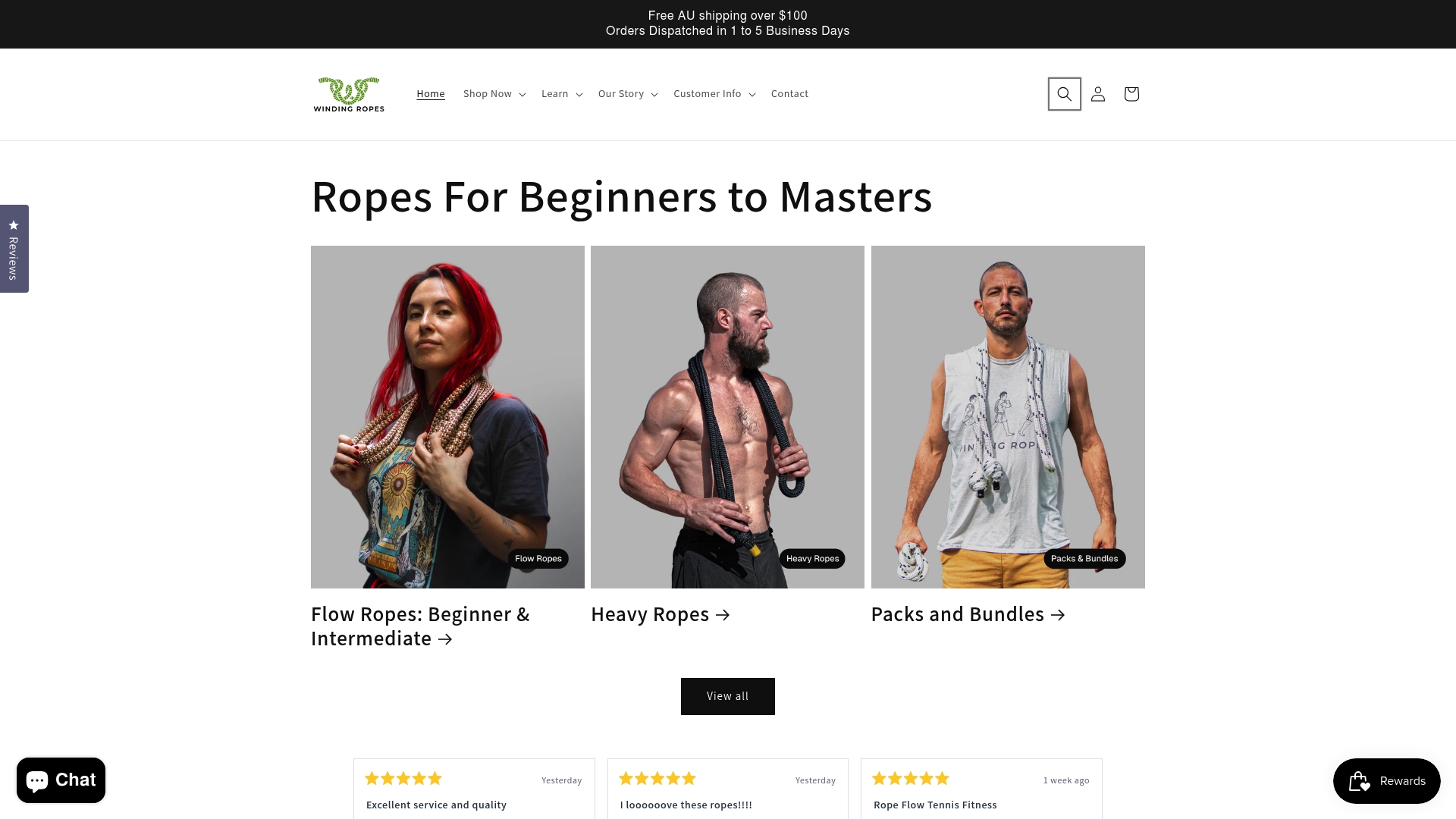
The range covers multiple weight categories, from entry-level flow ropes through to the Great White Shark at 1.5 kg, designed for advanced practitioners who have built their foundation at lighter loads. Each rope is sourced and manufactured with documented specifications, so the weight-to-diameter ratio you read on the product page matches what arrives. For those starting out, the free Rope Flow 101 ebook covers the foundational techniques that make quality equipment worth the investment. The full heavy ropes collection includes options for HIIT, supersets, and rehabilitation, with Australian quality assurance at every weight level.
FAQ
What does Australian quality mean for heavy ropes?
Australian quality in heavy ropes means the rope meets material and performance standards set by AS 2759 and AS 3569, is sourced from authorized local distributors, and is engineered for Australian environmental conditions ranging from coastal humidity to dry inland heat.
What is the best material for a fitness heavy rope in Australia?
Double-braided Nylon 66 with a urethane polymer coating is the standard for fitness and recovery ropes in Australia. It provides controlled stretch under load, abrasion resistance, and consistent grip texture across repeated training sessions.
Why should I avoid grey import heavy ropes?
Grey imports carry certifications from other markets that may not align with Australian standards, and manufacturer warranties are typically void on these products. If the rope fails during training, the buyer has no recourse and no verified compliance documentation.
How do I choose the right weight for a heavy training rope?
Start with a rope that allows you to maintain clean movement patterns for the full duration of your session. A 14mm rope at approximately 550 grams suits most beginners developing rope flow skills, with progression to heavier options as technique stabilizes.
How often should I inspect a heavy rope?
Inspect your rope before each session for visible wear, coating damage, and surface irregularities. Bend the rope at multiple points to check for internal stiffness or wire breaks that surface inspection alone will not reveal.