

Why Australian Quality Ropes Matter for Rehab
High-quality Australian ropes are defined as engineered rehabilitation tools that meet independent safety certification, deliver controlled elasticity, and maintain predictable performance under dynamic therapeutic loads. Understanding why Australian quality ropes matter in rehab starts with one fact: rope failure during physical therapy is not a product defect. It is a selection error. Windingropes builds ropes specifically for progressive, brain-challenging movement, using Australian manufacturing standards that put safety and performance ahead of cost. Rehabilitation practitioners who choose certified ropes see better patient outcomes, fewer equipment failures, and more consistent therapy results.
Why Australian quality ropes matter in rehab settings
Australian quality ropes matter in rehabilitation because they deliver independent safety certification that generic ropes simply cannot match. NATA-accredited laboratories verify Minimum Breaking Strength, confirm traceability, and test ropes under conditions that replicate real-world stress. That verification process means a therapist can trust the rope will perform the same way on day one and day three hundred.
Rope quality in rehab is not a secondary concern. A rope that snaps, slips, or loses elasticity mid-exercise exposes patients to sudden, uncontrolled forces. For someone recovering from a shoulder injury or neurological event, that kind of mechanical surprise can set back weeks of progress. The importance of quality ropes becomes clear the moment you consider how much a patient depends on consistent resistance and smooth movement feedback.
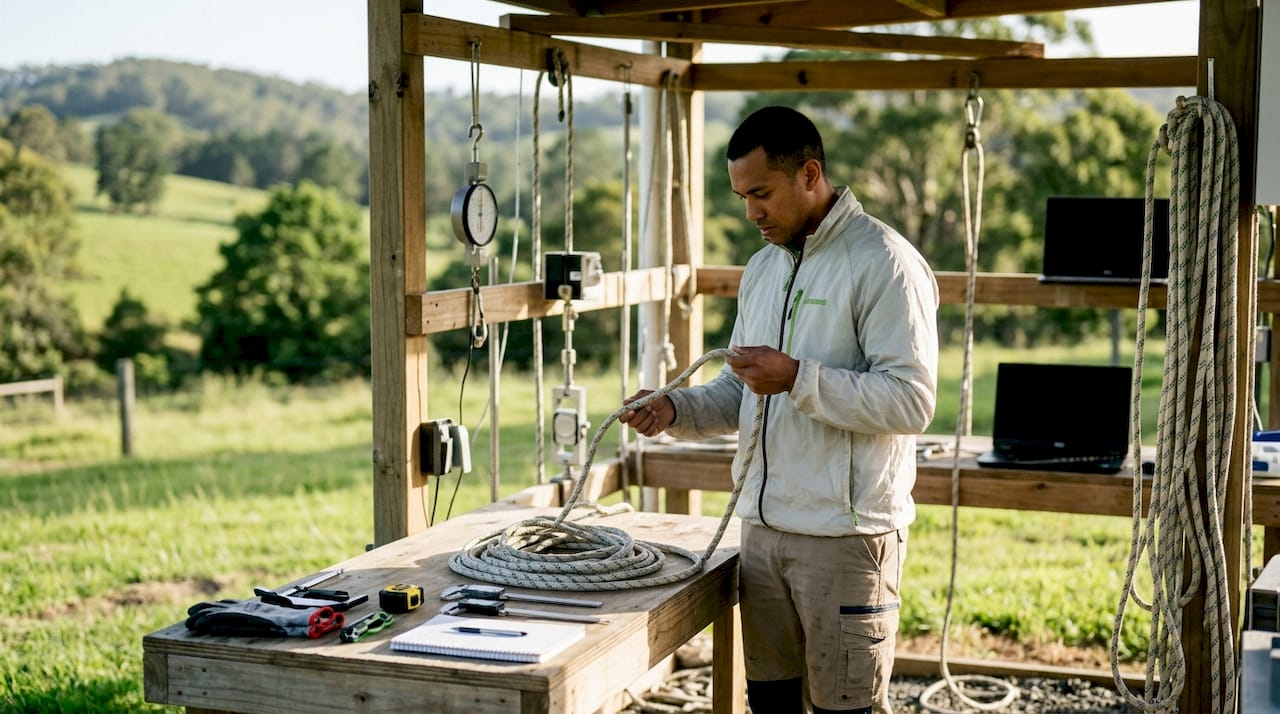
Australian manufacturing adds another layer of reliability. Local production means tighter quality control, shorter supply chains, and accountability to Australian standards. Windingropes applies this principle directly, producing ropes that are tested, traceable, and built for the specific demands of therapeutic movement training.
How Australian standards and independent testing ensure rope safety
Australian industry leaders use NATA-accredited labs for independent rope testing to confirm reliability in high-stakes applications. NATA accreditation verifies both competence and traceability, confirming that Minimum Breaking Strength exceeds labeled ratings. That margin matters in rehab because patients apply variable, unpredictable loads during recovery exercises.
Reliability of ropes also stems from adherence to ISO 9001 and MEG4 standards, which ensure consistent quality for human-centered applications. These standards require multiple testing protocols across production batches, not just a single pass-or-fail check. Each protocol adds a layer of confidence that the rope will behave predictably under the specific conditions of physical therapy.
Key standards and testing elements that separate certified Australian ropes from generic alternatives include:
- NATA accreditation: Confirms lab competence and result traceability for Minimum Breaking Strength testing.
- Minimum Breaking Strength certification: Verifies the rope exceeds its labeled load rating, providing a real safety margin.
- Multiple testing protocols: Covers fiber orientation, elongation behavior, and load-cycle performance across production batches.
- ISO 9001 compliance: Ensures manufacturing consistency from raw material to finished product.
- Documented traceability: Links each rope batch to its test results, enabling accountability in clinical settings.
Pro Tip: Ask your rope supplier for the NATA test certificate before purchasing for a clinical rehab environment. A legitimate Australian manufacturer will provide it without hesitation.
What makes Australian rehab ropes suitable for physical therapy?
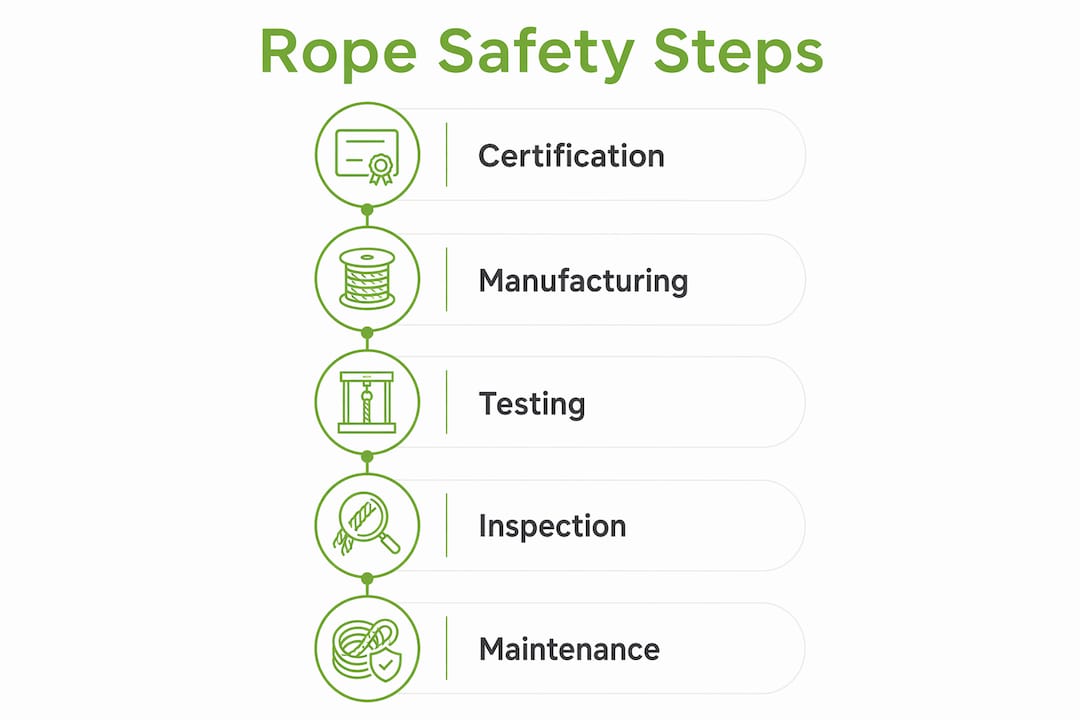
Australian rehab ropes with 30% elongation absorb mechanical energy, preventing the jarring forces that can worsen injuries during therapy. That elongation is not a flaw in the rope. It is an engineered feature. When a patient pulls, swings, or flows a rope through a movement pattern, the controlled stretch absorbs peak force and returns energy smoothly. That process protects joints and muscles from sudden load spikes.
Double-braided nylon ropes meeting a conservative 5:1 design factor per ASME B30.9 provide a meaningful safety buffer for therapeutic use. The 5:1 factor means the rope is rated to handle five times the maximum expected working load. In rehab, where patients may apply uneven or unexpected forces, that buffer is not excessive. It is the minimum acceptable standard.
Rehab pulley systems use specialized ropes and weights to enable 360-degree targeted muscle and joint training for improved therapy results. These systems enhance muscle strength, balance, joint mobility, and coordination across a comprehensive range of movements. Rope-based training allows therapists to isolate specific muscle groups while maintaining natural, multidirectional movement patterns.
The properties that make Australian ropes suitable for physical therapy include:
- Controlled elongation (30%): Absorbs shock during dynamic movements, protecting recovering joints and soft tissue.
- 5:1 design factor: Provides a verified safety margin above the maximum working load in therapy exercises.
- Consistent diameter and weight: Allows therapists to prescribe progressive overload with predictable resistance changes.
- Braided construction: Maintains shape and flexibility through repeated use without kinking or losing structural integrity.
- Certified fiber orientation: Ensures the rope behaves the same way across its full length, preventing weak spots.
Pro Tip: For patients in early-stage rehab, start with a lighter rope and shorter movement arcs. Progressive overload works best when the rope’s resistance matches the patient’s current capacity, not their target capacity.
Windingropes applies the progressive overload principle directly to its rope design, offering multiple weights so practitioners can advance patients through a structured training program. The active recovery benefits of controlled rope flow also support neurological recovery by reinforcing movement patterns through repetition.
What are the risks of using poor-quality ropes in rehabilitation?
Poor-quality ropes in rehabilitation settings create two distinct categories of risk: mechanical failure and therapeutic ineffectiveness. Both cause harm, but the second is often overlooked.
Quality ropes reduce snap-back risks and severe mechanical failures, making environments safer for patients and practitioners. Snap-back occurs when a rope under tension fails suddenly and recoils toward the user. In a clinical setting, that event can cause serious injury to a patient who may already have limited reaction speed or physical stability. Using precision-tested materials eliminates this risk category entirely.
Incorrect rope rigidity or oversizing for the patient neutralizes safety benefits and increases injury risk during rehab exercises. A rope that is too stiff loses its kinetic elongation advantage and becomes a static resistance tool with unpredictable load transfer. That mismatch turns a therapeutic aid into a liability.
The most common problems with substandard ropes in rehab include:
- No load rating or certification: The rope has no verified Minimum Breaking Strength, making load management impossible.
- Inconsistent elongation: The rope stretches unevenly, creating unpredictable force spikes during movement.
- Poor fiber orientation: Weak spots develop along the rope’s length, increasing the risk of mid-exercise failure.
- No load-cycle testing: Professional manufacturing controls including fiber orientation, heat treatment, and load-cycle testing are absent in generic products.
- Rapid surface degradation: Low-quality fibers fray quickly, creating abrasion risks for patients’ hands and skin.
Australian rehab practices involve multi-disciplinary teams using certified equipment as part of progressive, structured return-to-work rehabilitation programs. That collaborative framework depends on every piece of equipment performing as specified. A non-certified rope breaks that chain of accountability.
How to choose and maintain Australian quality ropes for rehab use
Choosing the right rope for rehabilitation starts with matching the rope’s mechanical properties to the patient’s current capacity and the specific exercise type. A rope suited for early-stage shoulder rehabilitation differs from one used in advanced coordination training. Diameter, weight, elongation rating, and construction type all affect how the rope performs in practice.
Routine documented assessments for rope degradation, abrasion, and fatigue prevent catastrophic failures that simple visual inspections miss. Load cycle counts and environmental stress must guide rope retirement rather than age or appearance alone. A rope that looks intact may have internal fatigue that only shows up under load.
Practical selection and maintenance criteria for rehab ropes:
- Match rope weight to patient capacity: Start lighter than the patient’s perceived maximum and progress systematically.
- Check diameter-to-sheave ratio (D/d): An appropriate D/d ratio prevents rope fatigue at contact points in pulley-based systems.
- Inspect after every session: Look for fraying, kinking, discoloration, and changes in surface texture.
- Document load cycles: Track how many sessions each rope has completed and retire it based on manufacturer guidelines, not appearance.
- Store away from UV and moisture: Environmental exposure degrades rope fibers faster than mechanical use in many clinical settings.
- Request batch test certificates: Verify that the rope’s NATA certification applies to the specific batch you received.
Pro Tip: Create a simple rope log for each piece of equipment in your clinic. Record the purchase date, batch number, session count, and any inspection notes. That log becomes your liability protection if a failure ever occurs.
Windingropes’ heavy ropes training program provides structured guidance on progressive loading, helping practitioners apply these selection principles within a proven training framework.
Key Takeaways
Australian quality ropes matter in rehabilitation because certified elasticity, independent testing, and proper maintenance together determine whether rope-based therapy helps or harms patients.
| Point | Details |
|---|---|
| NATA certification is non-negotiable | Independent testing confirms Minimum Breaking Strength and traceability for clinical accountability. |
| 30% elongation protects patients | Controlled stretch absorbs peak forces, preventing joint and soft tissue damage during therapy. |
| Poor-quality ropes cause two harms | Mechanical failure and therapeutic ineffectiveness both result from using uncertified or mismatched ropes. |
| Maintenance requires documentation | Visual inspection alone misses internal fatigue; load cycle logs and batch records are required for safe use. |
| Progressive overload needs certified tools | Advancing patients through resistance levels only works when the rope’s properties are consistent and verified. |
What 15 years of watching ropes fail taught me
Ropes get treated as commodities in most rehab supply chains. A buyer sees a diameter, a length, and a price. They pick the cheapest option that looks right. I have watched that decision cause problems that no amount of good clinical work can fix.
The thing practitioners miss is that a rope’s job in rehab is not to hold weight. Its job is to transfer force in a specific, predictable way. When the elongation is wrong, when the fiber orientation is inconsistent, when there is no test certificate behind the product, the rope stops being a therapeutic tool and starts being a variable you cannot control. You cannot build a progressive training program on a variable you cannot control.
Certified Australian ropes, the kind that come with NATA documentation and real manufacturing controls, remove that variable. Patients feel the difference immediately. The movement is smoother, the resistance is consistent, and the feedback loop between effort and result becomes clear. That clarity is what drives recovery. Windingropes builds ropes with that principle at the center, and the difference shows up in how patients respond to the work.
— Pablo
Windingropes: Australian-certified ropes built for rehabilitation
Windingropes produces high-quality ropes made in Australia, designed for the progressive, brain-challenging movement training that rehabilitation demands.

Every rope in the Windingropes range is built to Australian manufacturing standards, with consistent elongation properties and verified construction that practitioners can rely on session after session. The Rope Down Under is a purpose-built Australian flow rope at 12mm and 450g, suited for coordination and strength work across a range of rehab applications. For practitioners new to rope-based therapy, the free Rope Flow 101 ebook provides a clear foundation in technique, movement principles, and progressive loading. Windingropes also offers heavy ropes for advanced strength and coordination training when patients are ready to progress.
FAQ
What makes Australian ropes better for rehabilitation?
Australian ropes built to NATA-accredited standards deliver verified Minimum Breaking Strength and consistent elongation, both of which are required for safe, effective therapeutic exercise. Generic ropes lack this certification and cannot guarantee predictable performance under dynamic rehab loads.
What is the 5:1 design factor in rehab ropes?
The 5:1 design factor means the rope is rated to handle five times its maximum expected working load. This safety margin accounts for the variable and sometimes unpredictable forces patients apply during recovery exercises.
How often should rehab ropes be inspected?
Ropes should be inspected after every session for fraying, kinking, and surface changes, and retirement should be based on documented load cycle counts rather than appearance alone. Internal fatigue is not visible to the eye.
Can rope flow training support neurological rehabilitation?
Yes. Rope flow training reinforces movement patterns through repetition, which supports neurological recovery by building coordination and motor control. The controlled, rhythmic nature of rope flow makes it suitable for patients rebuilding movement confidence.
Why is rope rigidity a risk in physical therapy?
A rope that is too rigid loses its kinetic elongation benefit and transfers force abruptly rather than smoothly. That abrupt force transfer increases injury risk, particularly for patients with joint sensitivity or limited muscle control during recovery.